Chess lessons for kids and teens.
Tournaments in Switzerland and abroad, news from our live events and a coach who fits you.
Why chess
What chess gives you
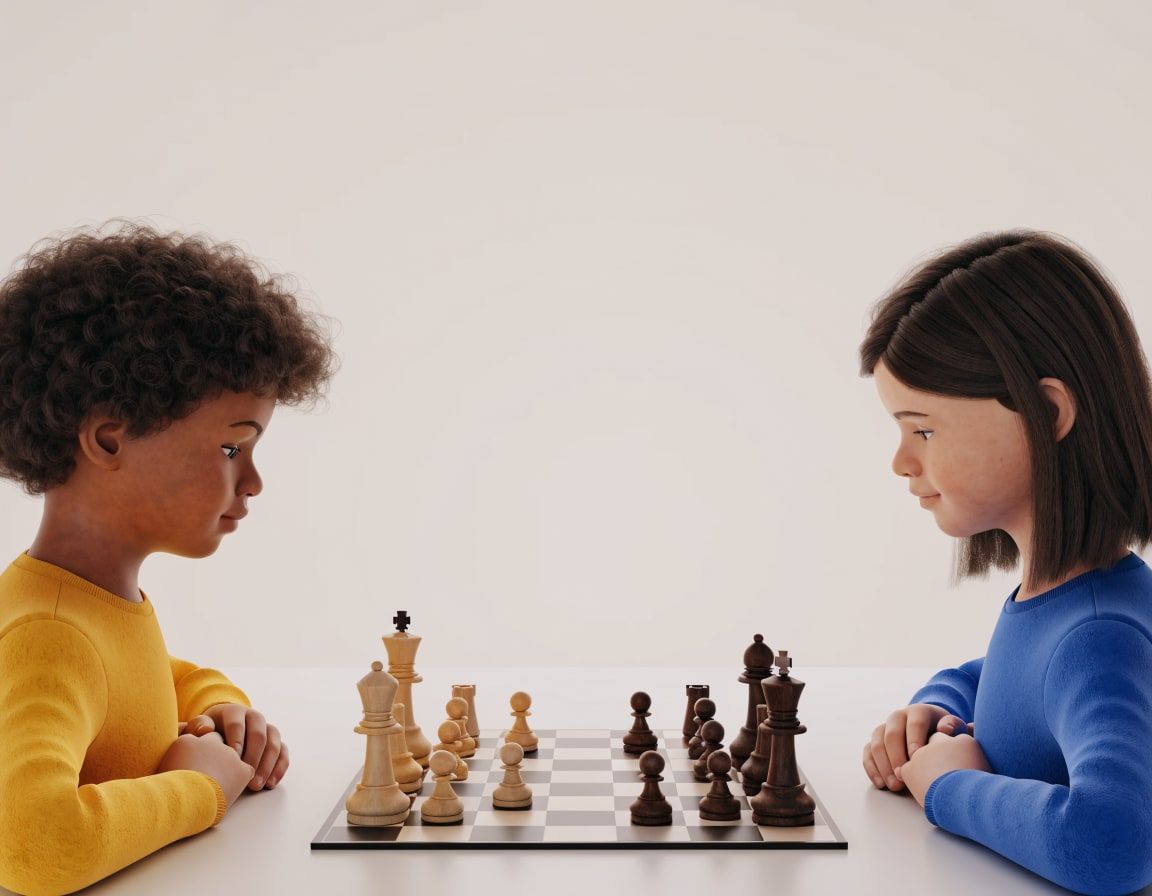
Chess is a game first, and it is fun. It also asks you to decide, over and over: attack or defend, stay with the plan or change it, settle down again after a mistake. What you learn along the way usually shows up later.
Concentration that lasts hours
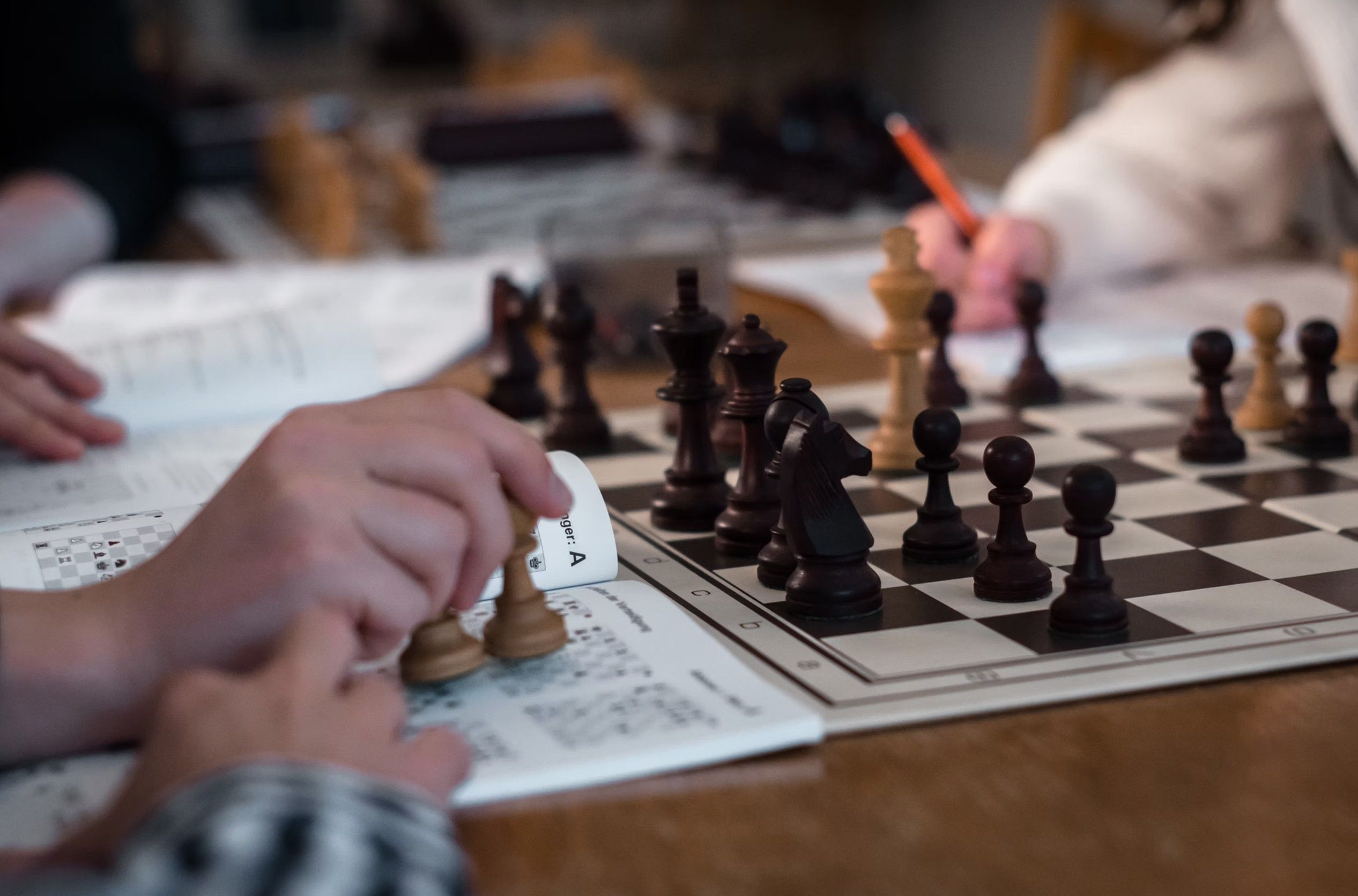
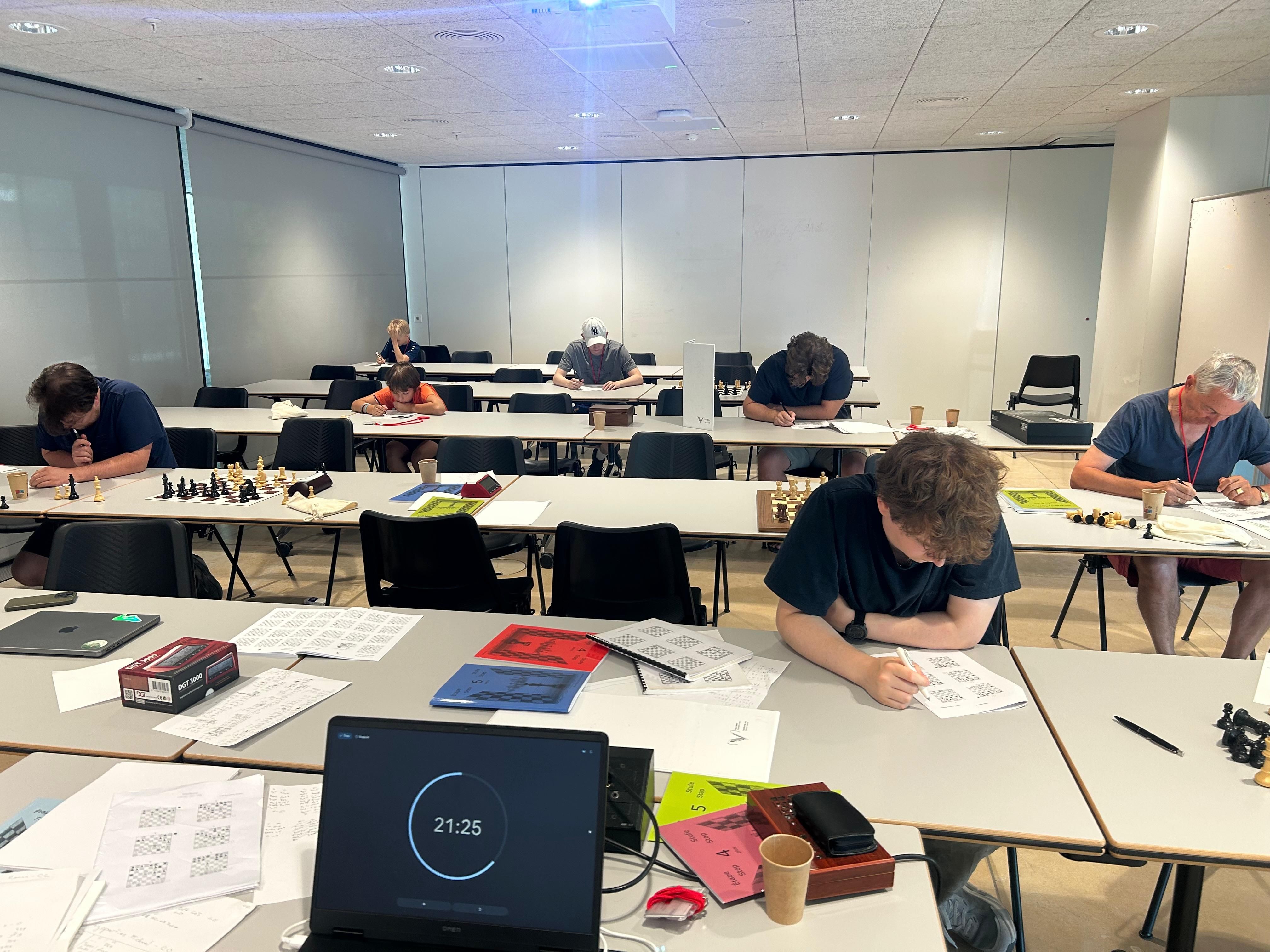
A classical tournament game runs two to four hours. You sit, you calculate, and nobody makes a single decision for you. Sit through that a few times and an exam stops feeling long.
Calculating ahead
Before every move you work through variations: if I play this, that comes back. Maths tests measure much the same thing, which is where chess instruction shows its clearest effect.
Losing and carrying on
Chess has no bad luck, no referee's decision and no team-mates to blame. You lose, you shake hands, and after lunch you play the next round.
People who like the same thing
At a tournament you meet children from all over Switzerland who are into the same thing. Plenty of them have known each other since their first under-10 weekend.
Deciding with no one to help
There is no team-mate at the board to carry the responsibility. You choose the move, you live with the result. Children who do that every week wait less often for somebody else to decide.
Being able to wait
The obvious move is rarely the best one. Learning to look once more before you reach for a piece wins you games, and it makes you less hasty elsewhere too.
Looking back and staying with it
After the game you look at where it turned and why. And if you keep solving exercises between lessons, you notice the difference yourself after a few weeks.
What the research says
Giovanni Sala and Fernand Gobet pooled 24 studies of chess instruction in schools. The clearest effect is in mathematics (effect size 0.38), a smaller one in general cognitive ability (0.34), and it grows once instruction passes roughly 25 hours. The authors themselves call it moderate, and a large British study found none at all. So we promise no better school marks. What we have seen in twenty years: children who play regularly stay with a hard problem longer.
Sala & Gobet, Educational Research Review 18 (2016), pp. 46–57Your path
From your first move to a championship
Nobody starts at the final. The way there has four stations. How long each one takes differs from child to child. The notes beside them are rough guides, not targets.
The first months
You learn the rules
Where you are
You know how every piece moves, you can mate with queen and rook, and you notice when a piece of yours is attacked.
The next step
Group training once a week. Nothing more is needed yet.
The three golden rules
Three rules get a player through the first ten moves without knowing a single opening by heart. They are in Emanuel Lasker's "Common Sense in Chess" of 1896 in this form. They are not a law, they are what holds in almost every position -- and the board here follows all three.
- Take the centre. The first move is a centre pawn. A piece in the centre reaches more squares than the same piece at the edge, and whoever holds the centre decides where the game happens.
- Develop the pieces. Knights and bishops out before the queen, and knights usually before bishops: where a knight belongs is clear sooner. Do not move the same piece twice while another one is still at home.
- Get the king to safety. Castle, and castle early. A king still in the middle after ten moves is in the way, and moving it out by then costs material.
The first year
You play at a club
Where you are
You play other children regularly instead of playing your phone. You know a few opening moves and why the centre matters.
The next step
Your first tournament: usually rapid chess on a Saturday, five rounds, home by the evening.
Légal's Mate
White leaves the queen hanging and mates three half-moves later. The pattern is over 250 years old and still catches somebody at a club night.
One to three years
You play tournaments
Where you are
You have a rating, you write your games down and you go through them afterwards. Losses still hurt, but only until the next round.
The next step
An SJEM qualifier, or the SJMM with your club. From here the long games count towards your FIDE rating.
Mate in five: the Opera Game
Paris 1858, Paul Morphy against the Duke of Brunswick and Count Isouard, in a box at the opera. From move 13 White gives up a rook, a bishop and the queen, and mates with the last piece left.
After that
You play for something
Where you are
You qualify for the Swiss final, play in the national league, or travel with the Swiss delegation to a European or World Championship.
The next step
One-to-one training, an opening repertoire of your own, and a plan for the whole season.
Réti's study, 1921
The white king looks hopelessly behind the pawn. He walks into the middle and manages both: catching that pawn or supporting his own. A draw.
Most players stop somewhere along this path, and that is entirely fine. Chess is good at every level: you do not need a World Championship to have a good Saturday at the board.
One-to-one coaching for kids
Why a coach makes it faster
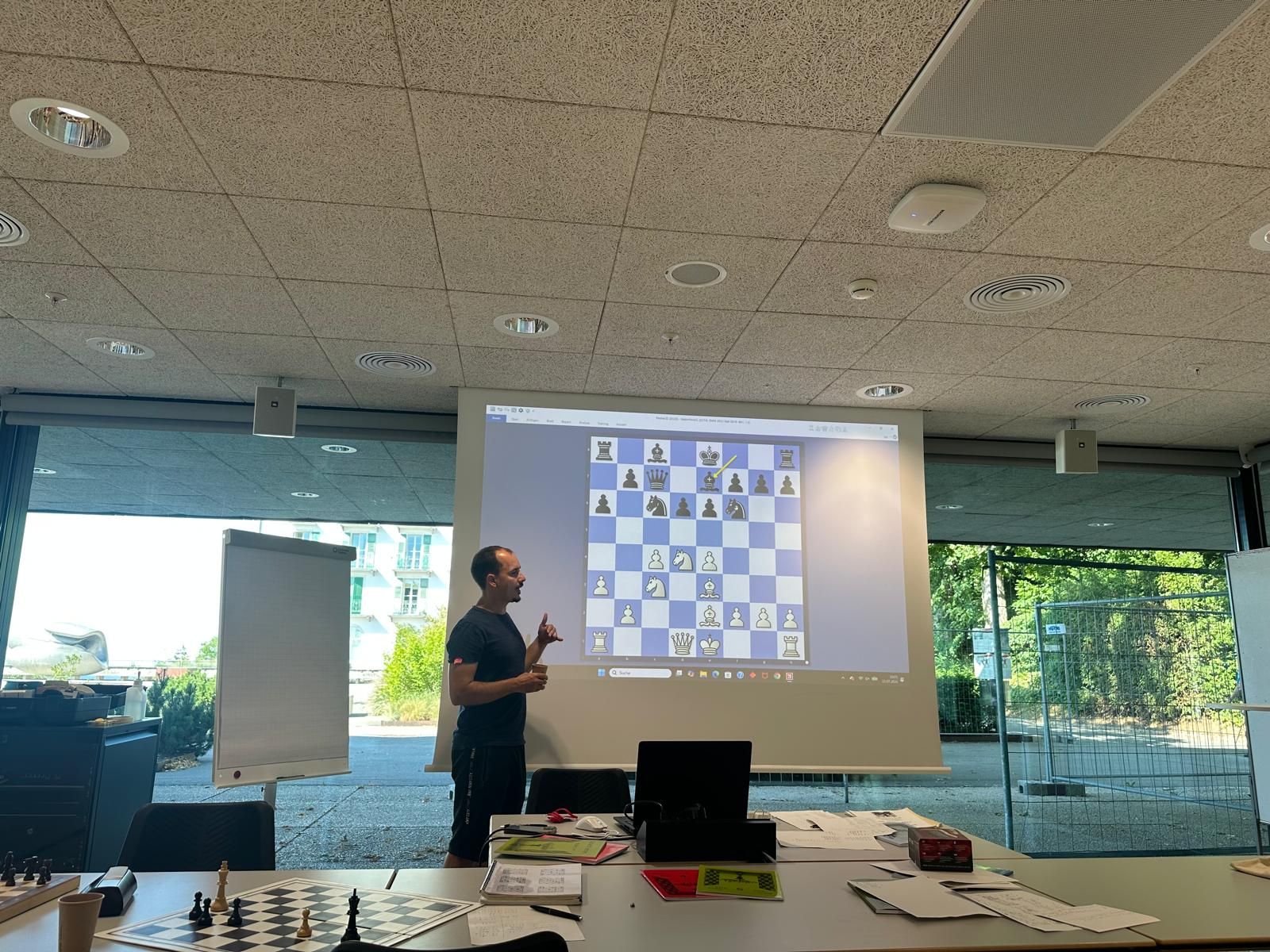
You improve through the work you do yourself, and that is the best-supported finding in chess research. A coach does not take that work off you. A coach decides what you spend it on, and that saves years.
Your games, not general topics
A coach goes through your own games. After ten of them he knows whether you lose in the endgame or already by move twenty, and that is what you practise.
The right topic at the right time
Opening theory does almost nothing early on; mating patterns do little later. Getting the order right is half the training.
A plan between lessons
A lesson is sixty minutes; the week has rather more. You get exercises that match where you stand, and next lesson somebody checks that they stuck.
Neil Charness and colleagues examined in 2005 what explains a chess player's strength. Most of it is explained by the hours spent working seriously at the board alone. Instruction predicted strength on top of that, independently of those hours. Tournament play alone did not.
Charness et al., Applied Cognitive Psychology 19 (2005), pp. 151–165Tournament calendar
The season’s dates have a page of their own: the SJEM qualifiers, the SJMM and the international tournaments, with how both championships work.
To the tournament calendarFind the coach who fits you.
Tell us where you are and what you want to achieve. We will get back to you and suggest the right coach.